How Strong Am I?
Frequently asked questions
Strength comparisons get cleaner when the lifts are measurable, repeatable, and hard to negotiate with.
What does 'stronger than X%' mean?
It means your estimated 1-rep max is higher than that percentage of people in the selected group after adjusting for your sex, age, and bodyweight. The universe changes the comparison pool, not the fact that the result is personalised to you.
Which group should I care about?
Most lifters should start with Barbell Lifters. It compares you to people who actually train with a barbell, while still adjusting for sex, age, and bodyweight, so it is usually the fairest peer group for strength athletes.
How do you estimate percentiles?
We use Kilgore strength standards as anchor points, calibrated by age, sex, and bodyweight, then map your lift into each universe's estimated distribution. The result is an informed benchmark, not a literal leaderboard of every person alive.
Am I being compared to everyone, or only people like me?
Both. General Population, Gym-Goers, Barbell Lifters, and Powerlifting Culture describe the broader pool, but your score is still adjusted for sex, age, and bodyweight. You are not being thrown into one giant pile with no context.
Should I enter my true 1RM or an estimate?
Enter your best 1-rep max. If you only know a recent heavy set, use the One Rep Max Calculator to estimate it first.
Does age matter?
Yes. Age is part of the model, alongside sex and bodyweight, so a 55-year-old and a 25-year-old at the same relative strength level can land on similar percentiles within the same universe.
Can I be strong without squat, bench, and deadlift?
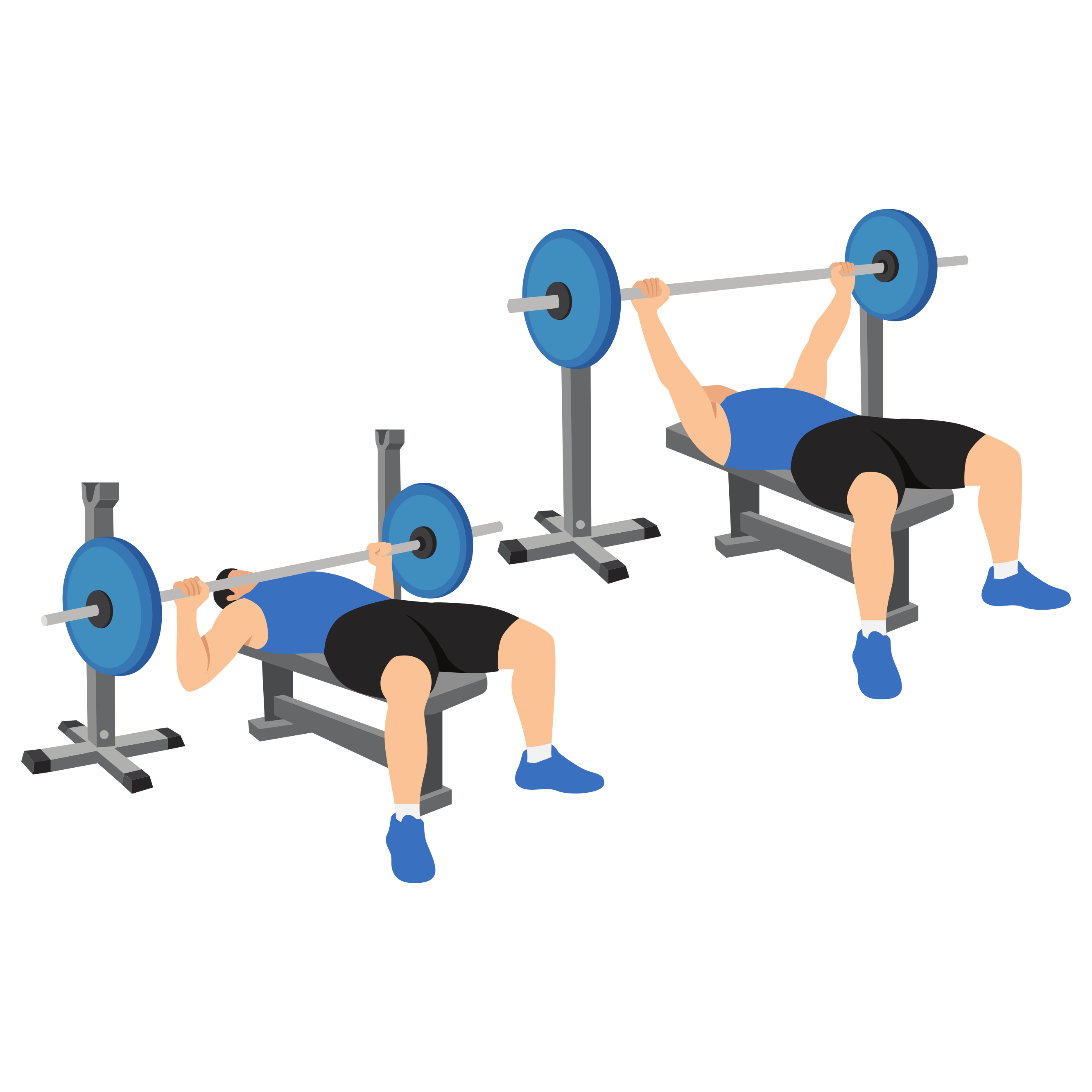
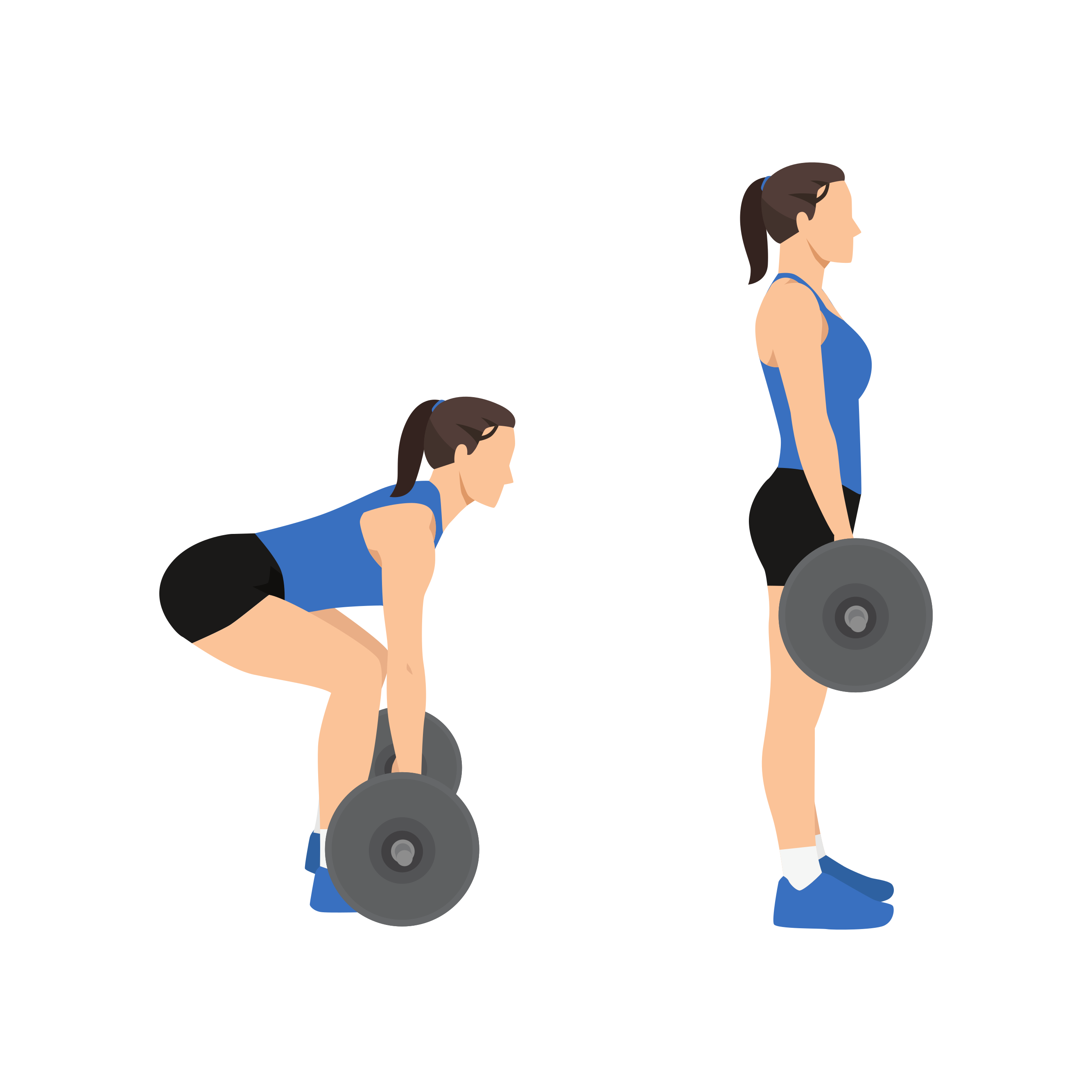
Yes, but you are ducking the cleanest scoreboard. Machines, dumbbells, kettlebells, calisthenics, and sport work can build real strength, but squat, bench, and deadlift are still the simplest shared test: fixed lifts, measurable load, clear range of motion, and fewer excuses.
Why does this calculator focus on barbell lifts?
Because barbells are brutally honest. A barbell does not care how the stack is labeled, whether the machine path suits your build, or whether the cable pulley is flattering you. You either move the weight through the lift or you do not.
What if I only care about looking athletic?
That is fine. Hypertrophy, conditioning, mobility, and sport skill all matter. But if you ask how strong you are, eventually the conversation has to touch heavy repeatable lifts. Otherwise you are measuring vibes with a pump cover on.
Do I need all three lifts for a useful score?
No. You can adjust one lift at a time and still get useful feedback. The full squat, bench, and deadlift set gives the cleanest picture because it covers lower-body drive, upper-body pressing strength, and hip/back pulling strength.